Skip to content
One mobile Bulk Bag filling station for multiple silos

One mobile Bulk Bag filling station for multiple silos

How Maxpac engineered a filling solution that can move within the existing production environment as needs change.

Discover the case
One mobile Bulk Bag filling station

Easy to use daily across multiple silos

A manufacturer of PVC compounds for the plastics industry needed one mobile bulk bag filling station to fill products from multiple silos. The challenge: the system had to be easy to move and compact, while also being safe, dust-controlled, and rugged enough for daily use within the existing production environment.

The customer is active in the recycling and production of PVC compounds for the plastics industry. During the compounding process, PVC resin is mixed with additives to create a homogeneous, dry powder blend. After screening, the PVC powders are conveyed to storage and finished-product silos. The compounds are used for the extrusion of plastic profiles and other industrial applications.

The site has several mixing and extrusion lines as well as more than 15 silos. To fill products from these silos into bulk bags, the customer needed one flexible solution that could be moved quickly between different positions. At the same time, the system had to be safe to operate and compact enough to function within the existing production environment.

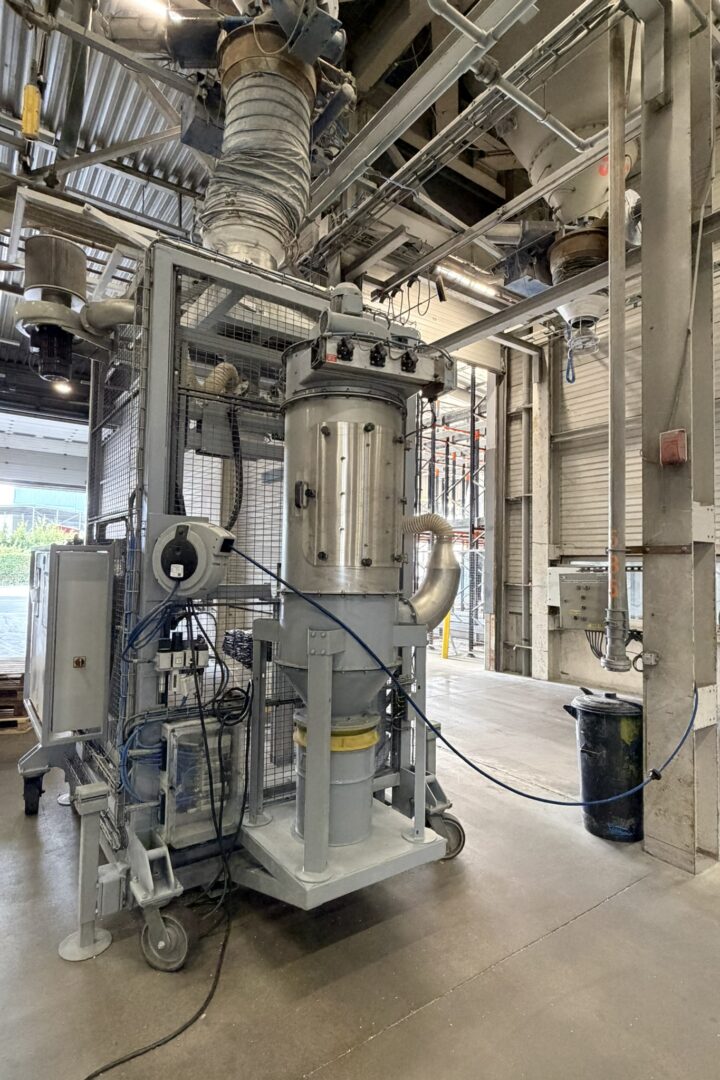
Maxpac therefore developed a single mobile bulk bag filling station that can be positioned beneath different silos depending on current production needs. This allows the customer to fill bulk bags from more than 15 silos using one system, without installing a separate filling station at every silo.

maxpac big-bag vulstation voor PVC compounds
The challenge

Mobile where needed, rugged where it matters

The customer’s request was straightforward: "keep it simple and practical". In practice, that meant balancing several technical requirements at the same time.

The bulk bag filling station had to be easy to move and quick to position beneath another silo. It needed to provide safe and ergonomic operation, support effective dust control during filling, and remain rugged enough for intensive daily use.

The existing production environment also influenced the design. The station had to be compact enough to operate within the available space and move between different operating positions.

This meant mobility could not be treated as a standalone feature. The dimensions, steel structure, safety provisions, connection to the silo, and controls all had to be designed as one integrated system.

The technical challenge was therefore not to add as much functionality as possible, but to combine mobility, safety, and durability within the physical constraints of the existing facility.

According to the Supply Chain Manager, the objective was simple: keep it simple, but do it well. Nothing more was needed. The previous machine was too large and included more options than necessary. For the new system, the focus was therefore on a straightforward, rugged solution with only the functions the customer actually needed in daily operation.

The approach

Designing around the environment, not just the machine

The complete system was specifically designed by Maxpac for the customer’s production environment.

Maxpac started by assessing the existing silo layout, available space, and production flow.

That analysis formed the basis of the concept. Only then was the mobile bulk bag filling station developed in detail.

The entire system was specifically designed for the customer’s production environment. It includes:

  • a mobile, rugged steel structure;
  • a filling system designed with dust control in mind;
  • a mobile base;
  • industrial locking mechanisms;
  • electrical controls;
  • CE-compliant safety provisions.

Because the system is mobile, the same station can be used beneath different silos. As a result, the customer does not need a separate fixed installation at every filling point.

This kept the concept simple: one system that adapts to production needs instead of multiple filling stations permanently tied to individual locations.

From the outset, the customer clearly requested a simple machine based on proven technology. Maxpac further developed that solution for the existing production environment. The custom engineering centered on the folding safety railing: it had to allow the system to fit beneath the lowest silo while still being capable of filling the customer’s largest bulk bag.

One specific constraint made the project particularly clear-cut

Compact custom engineering for moving between silos

The customer’s requirement seemed simple: a flexible solution that could be adapted quickly and safely to changing production needs.

The concept was kept simple from the start: one installation that adapts to production needs, rather than multiple filling stations fixed in separate positions.

Based on proven technology, Maxpac further developed the solution for the customer’s existing production environment. The custom design had to ensure that the installation fit beneath the lowest silo while still being able to fill the customer’s largest Big Bag.

At the same time, these requirements increased the overall dimensions of the installation. For relocation, the system therefore had to be more compact than in its operating position.

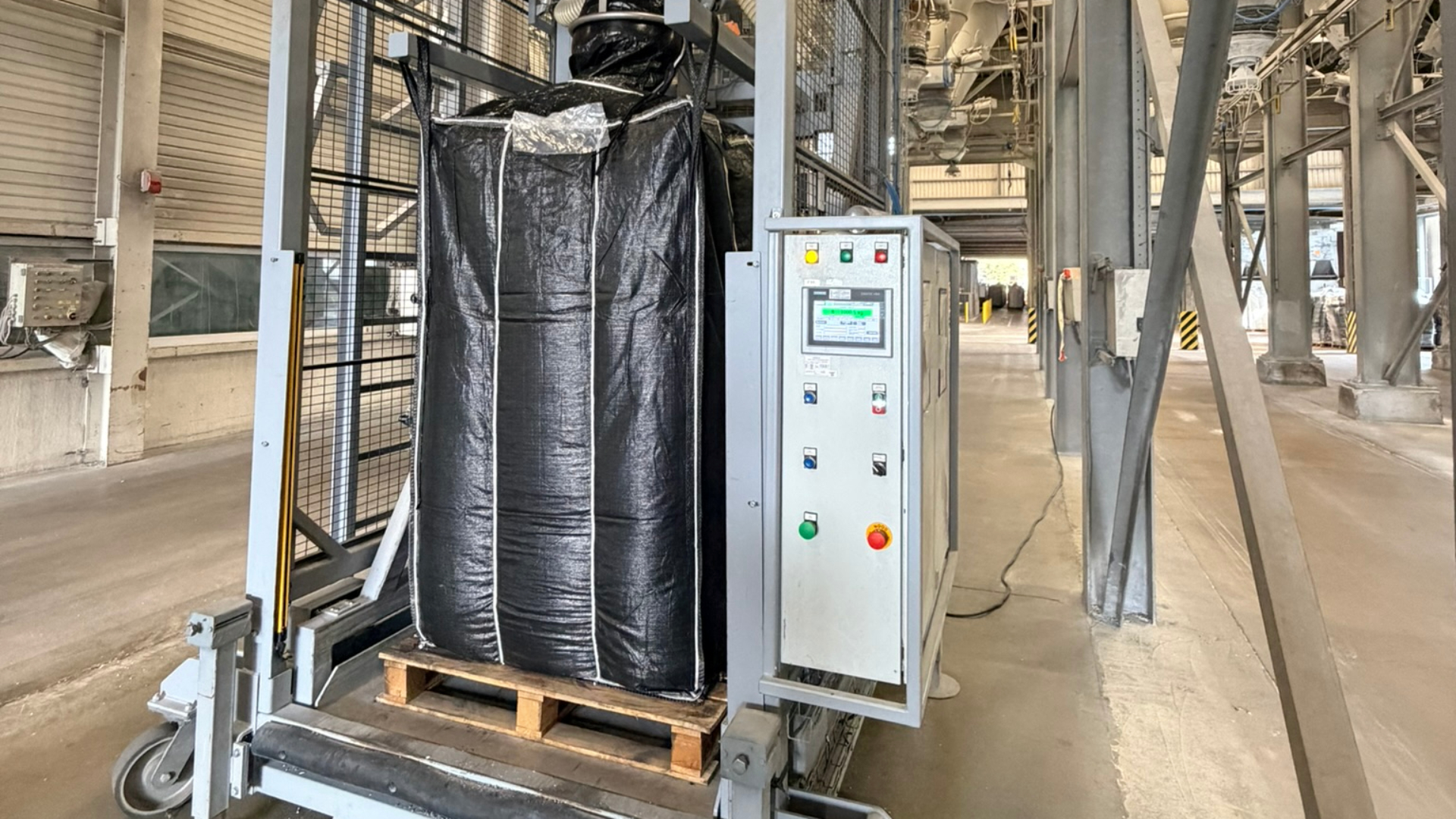
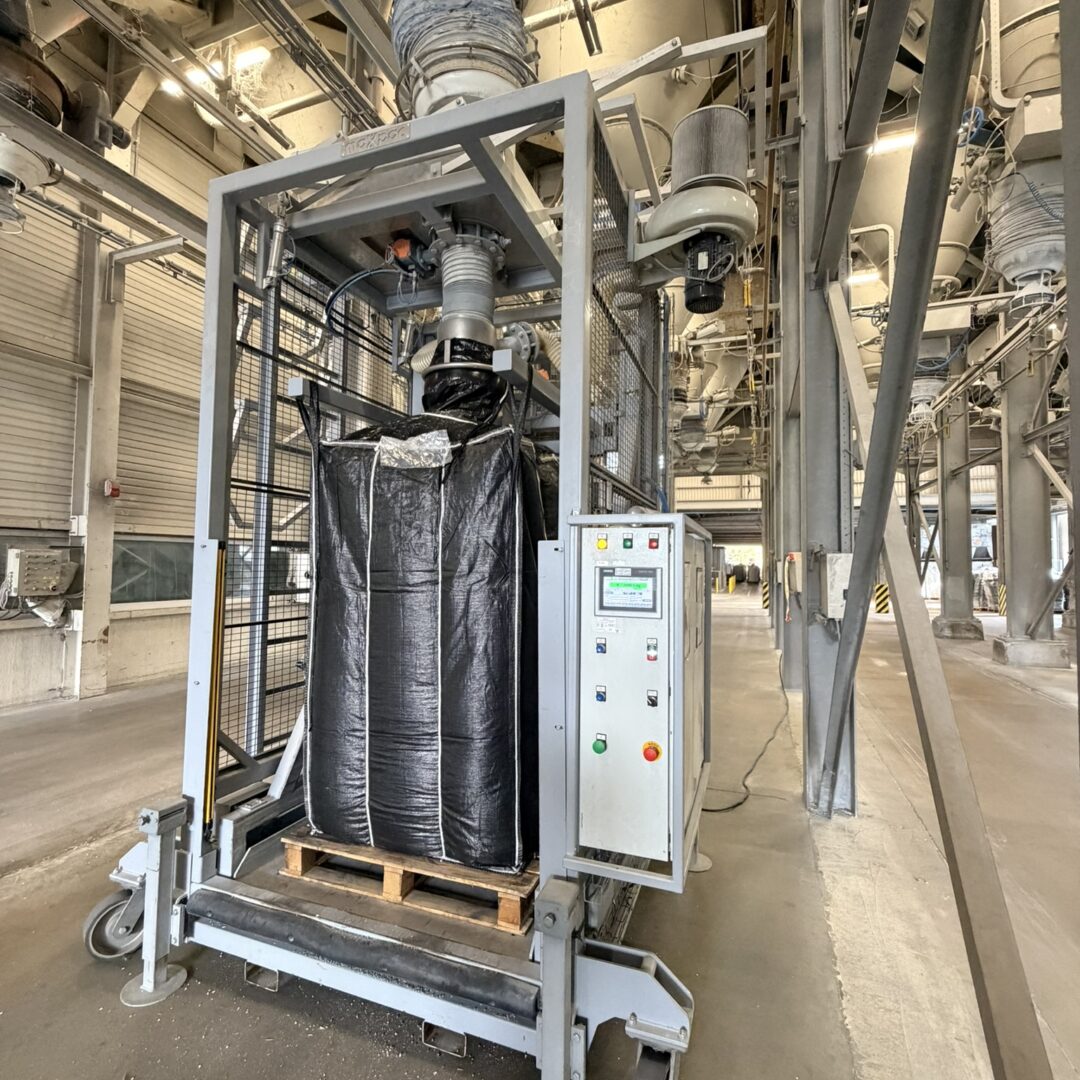
Maxpac developed a custom solution with foldable safety fencing and a foldable ladder. This allows the installation to be made more compact for relocation while keeping the required safety features in place during operation.

This design choice shows how the station’s mobility influenced even the smallest construction details. It was not simply a machine mounted on a mobile base; the entire installation had to be suitable both for operation and for movement between different locations in the production hall.

The construction itself was also kept compact for use within the existing production environment. In addition, attention was paid to ergonomic Bulk Bag handling and to a rugged design suitable for intensive industrial use.
The process

From analysis to commissioning

The total project lead time was six months.


Step 1

Analysis & concept development

After the initial analysis, Maxpac moved on to concept development and full mechanical engineering. This included the technical design of the mobile steel structure, lifting structure, filling structure, silo connection, and safety features.

Step 2

Production & testing

The complete installation was then manufactured in Maxpac’s own workshop. A FAT was carried out to test the system’s functionality in advance.


Step 3

Commissioning & training

This was followed by installation and commissioning at the customer’s site. All operators were trained in the safe use and efficient relocation of the installation.

The result

One system for more than 15 silos

A Bulk Bag filling station that can be positioned under more than 15 different silos.

The customer now has one mobile bulk bag filling station that can be positioned beneath more than 15 different silos depending on production needs.

This builds flexibility directly into the equipment. Instead of installing a separate station at every filling point, the same solution can be used at multiple locations.

The system combines this mobility with the requirements that were central from the start: safe operation, effective dust control, compact dimensions, and a rugged structure for daily industrial use.

The foldable safety railing and ladder demonstrate how specific constraints within the existing production environment were incorporated into the design.

Moving the station from one position to another takes approximately 10 minutes.

The result also continues to meet the customer’s original expectations after commissioning. The customer is very satisfied with the machine and reports that it does exactly what was expected of it.

This case shows that industrial customization does not automatically require more machines or more technology. The challenge was to combine mobility, compact dimensions, robustness, and safety in a single solution. By first analyzing the production environment and its physical constraints, Maxpac developed one mobile Big Bag filling station that can be used under multiple silos and adapt to changing production needs.

maxpac big-bag-vulstation voor PVC compounds

This reflects Maxpac’s approach to packaging projects: where a proven solution is available, it serves as the starting point. The engineering then focuses on customization and proper integration into the customer’s production process and existing infrastructure.

Would you like to see our Bulk Bag filling system in action?

Contact us for a no-obligation reference visit and discover how our Bulk Bag systems can make your operations faster and more flexible.

Schedule a visit

Consult with our experts

Our packaging specialists are ready to assist you with the design, installation, startup, maintenance, and optimization of your packaging line.

Consult with our experts today, free of obligation. And see how you can achieve more reliability, efficiency, and return from your packaging line as soon as tomorrow.

Contact us

CEO / Managing Partner

Alex Govaert


We pack a punch

Stay ahead with these cases

Get inspired by our success stories in various sectors

A producer of sugar and plant-based ingredients - Nutrients & Supplements

40 Big Bags per hour, food-safe and ergonomic


How Maxpac developed a Bulk Bag filling system that combines capacity, hygiene, ergonomics, and automatic protection.

Discover the case
A flour mill and milling company - Nutrients & Supplements

More capacity with an existing flour packaging line


Maxpac delivered a new packaging line, fully tailored to the existing production environment, offering greater capacity, flexibility, and full compliance.

Discover the case
A logistics service provider - Polymers

Container tipper unloads up to 35 tonnes of polymers at the Port of Antwerp


Maxpac supplied a hydraulic container tipper: a proven solution for containers weighing up to 35 tons.

Discover the case